Category Archives: writing

IMG_8496

Somatic Generosity: Cultivating empathy in the classroom and beyond

IMG_8496

Somatic Generosity: Cultivating empathy in the classroom and beyond
Deirdre Morris , MFA

As an educator, I often observe students struggling with new concepts and issues of heritage
and identity. The process of understanding the somatic heritage we carry, socially and
culturally, through embodied practices, offers students alternative pathways to knowledge -
embodied knowledge, traditional knowledge, relational knowledge. In presenting an
experiential learning model, students can experience in a direct way their growing awareness
and knowledge.
The intention of Somatic Generosity is to create an opening for explorations of vulnerability,
empathetic listening and subjective awareness. These are the skills needed to understand how
to be generous and how effective generosity as a place of operation can be in settings within
and outside of the academy.
Why generosity? What does generosity have to offer in a pedagogical setting? From my
experiences teaching over the past 20 years, I’ve discovered that students want to learn how
to speak about their work with embodied confidence. They want to connect with their fellow
students and colleagues. They wish to be recognized as contributors to the environments they
work, learn and live in. And in return they opened themselves up to doing the same for others.
Empathy. With empathy comes generosity. Giving without needing something back in return.
Empathy, generosity, listening, and practical skills like comfort in public speaking and
confidence in one’s own work, and how to relate in all of these settings creates growth
opportunities both within a student’s career and life.
How do we learn how to be generous or to empathize with others? If this is not modeled to us
or we do not have access to these kinds of experiences in our lives, then how do we learn
them? Is the traditional classroom a place we can use to teach students these skills? Do other
educators and institutions agree that these kinds of life skills are important?
Somatic Generosity is a transferable and sustainable practice in social spaces beyond the
classroom. Students walk away having learned how to navigate social and cultural
environments they may not be inherently a part of; an experiential life lesson.
Somatic Generosity is a series of educational platforms, techniques and exercises. Some are
physical that connect students to their bodies others are cognitive that tap into opinions we
have about people we encounter in all of the environments of our lives. These platforms assist
students in developing their self-awareness about their opinions, often developed through a
cultural or social identity/heritage that they may have about another person. What would it do
to have students talking and listening to each other, creating a community in the classroom?
How would it feel if the people you worked with and taught c ared about the other people in the
room?
How do we become more aware of when we are being generous? The ? rst tool I teach is what
the affect of being generous feels like in our body via an exercise of creating ‘ community
agreements ’ . Community agreements allow for everyone ’ s voice in the room to be heard. Being
heard and seen is often the ? rst step to feeling more secure and more able to share in a
genuine way. We practice generosity by knowing ourselves, and learning to care for others.
When we feel seen and heard we are more generous with everything. This creates a positive
feedback within our classroom.
’ Agreements ’ is a term used in activism to describe how participants in a particular space will
operate. A consistent agreement was: what happens in this space stays in this space. With this
agreement in place students felt safer and more comfortable sharing things about their
personal lives that they would not normally reveal. As they listened to each other they began to
understand that a judgement or criticism of another student they may have had based on
appearances, was not true. That they all shared a lot more than they thought they did. They felt
more compassion for their fellow students due to this shift in perspective.
A more physical technique involved students partnering up and each taking a turn rocking the
limbs and torso of the other student. I would give the prompt to touch and rock this body as if
it were your body. Students who were not familiar with being touched outside of intimate or
familial relationships were a little uncomfortable at first, but really got into it after a few
moments. They recognized that the way they touched this person would most likely be the way
they would be touched as well. So they became very aware and careful with their touch. This
exercise produced an immediate closeness between students and broke down another layer of
critique and judgement.
In the 2 years of implementing this work while teaching at UC Davis, I received feedback that
students felt seen, heard and secure enough to be more vulnerable. This is one of many
aspects that was revealed through the surveys and within office hours and emails sent after the
semester had ended.
In the Indigenous communities I have worked within, we practice giving without receiving. This
is an inherent part of our culture. In a consumer based culture, giving is only done in
relationship to receiving. One gives with the intention of getting something back. This is a
material exchange. In the Indigenous, US and Canadian based communities I have been a part
of, you give because that is what you do, you share what you have materially; within your heart;
your internal and external resources, your knowledge.
It is from this practice that I developed the format and techniques of Somatic Generosity.
Creating a model of self-awareness, vulnerability and empathy, by engaging the body’s felt
sense of generosity.
Somatic Generosity is a socially innovative platform that has broad reaching social, political
and educational impact. These platforms have expanded my students’ and colleagues’
self-awareness of what knowledge is and how to apply their knowledge from a sustainable
place of abundance.
cracks femart photo

The Cracks Are How The Light Gets In

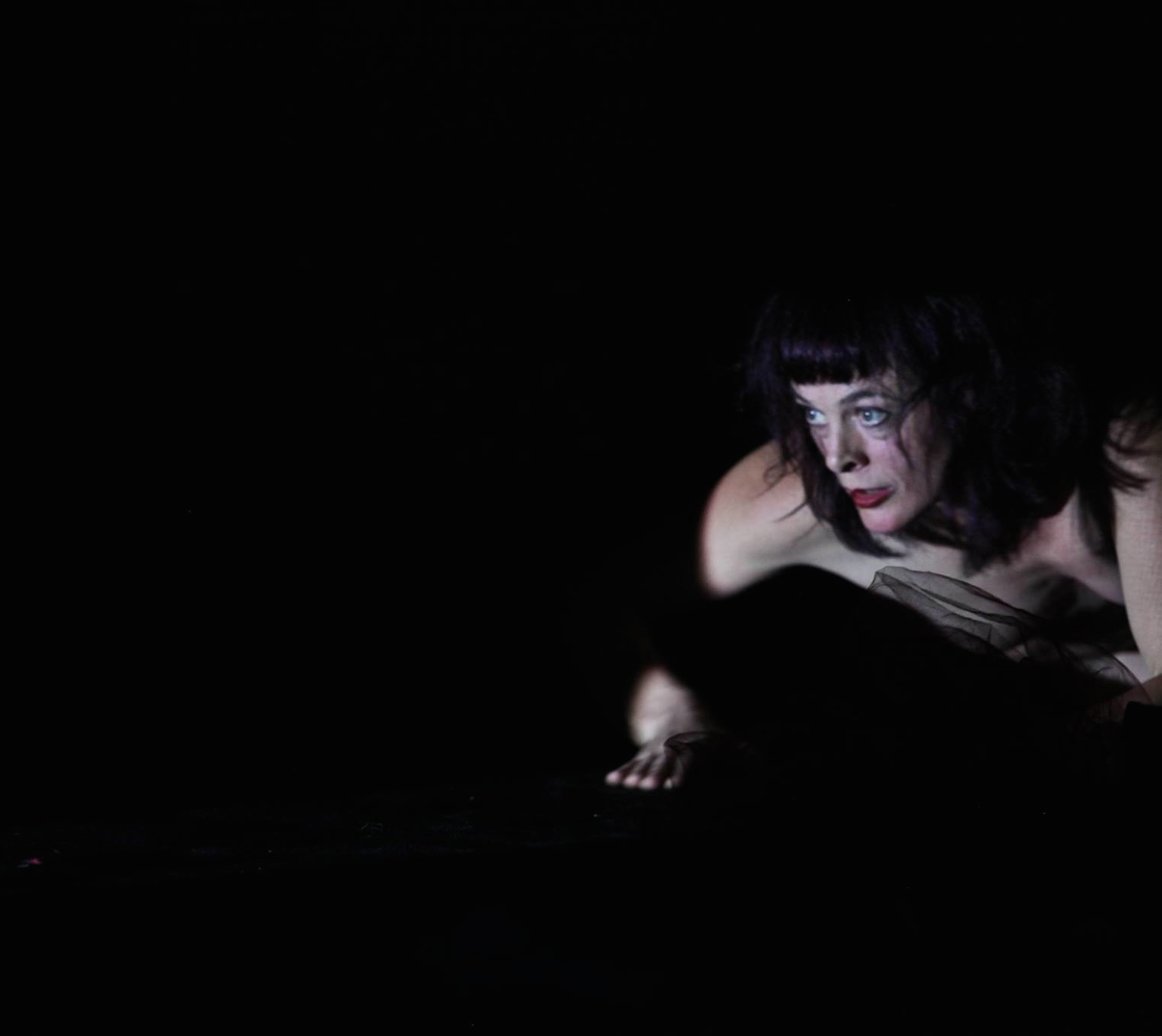
cracks femart photoThe Cracks Are How The Light Gets In, a solo performance by Deirdre Morris with Collaborator Iu-Hui Chua and Animation Design and Production by Brandon Gonzalez

The Cracks Are How The Light Gets In, is a project based in questions of normative success, empowerment and vulnerability. This solo exploration offers an experience of live performance, multimedia video work, dance, physical theater, connection and revelation. Together we are looking to uncover and reveal the vulnerable and tender spaces in our bodies conditioned by notions of normative success.

Mainstream media culture has a narrowing effect on our lives. When the images it offers us are internalized, it narrows our definitions of beauty, power, intelligence and well being. Our identities are often portrayed in the media in tropes and stereotypes that misrepresent our actual lived experiences. This perpetuates those systems of oppression that allow sexism and racism to prevail in our society. It is the task of those of us that are marginalized by this portrayal of success to create our own shared spaces to celebrate our underrepresented, shared experiences.

Inspried by a passage in Rebecca Solnit’s Men Explain Things To Me, The Cracks Are How The Light Gets In, provokes questions of identity, intimacy, vulnerability, and relationship to power/empowerment interpreted as physical scores mapped as a memory game. The intertwining of time, place and space as a metaphor to understand the how-we-got-to-where-we-are-today in a media culture dominated by a normative idea of success and power that does not include shared lived experience but rather reaches for an ideal that is part automaton part technological cyborg. Our interest is in the flesh experience of the body and the sociological impact our shifting norms are wreaking on our tissues, nervous systems and ideas of balanced relationship to our ecologies.

Like forging a new kind of 21st century ritual, we are interested in dipping into the magic of the threads of connection representing a time, place or history as heritage maps displayed on our bodies, revealing the different kinds of strength, beauty, vitality and wisdom that is acquired through experience.

How do we reclaim our representation in popular media? How do we celebrate the lived experience of our everyday lives and the struggle against invisibility, invalidation and assimilation? How do we share our vitality, mastery, knowledge and strength?

Seeing through the lens of the queer/ed bodies, politics and questions of image in a virtual world become the lens we see our lives through. Live theater is a site we can explore an alternative to the mainstream media culture. A space where stories can be shared and explored for their universality that brings us together while thoughtfully questioning why we are a part.

IMG_0089

the picnic under the tree

IMG_0089

These are the things I know: we made something outside and brought the outside/ness inside; we gathered the journey to a place inside ourselves and transported that sense, a sense of gathering and knotting together by sharing food and stories; a sense of play and history by mapping pathways with video, photos and gestures. We do not have the ability to rehearse what we are going to do so it is not until it is up and running that I see what it is doing. We make choices from past experiences as to what something can do; we make agreements about what we will do; we chose how we would place it in the space (I am not sure the placement will work for the audience) and we have a brief discussion on sequence. We use crafted choices and moments of chance intersection. The crafted choices next to the chance encounters create a more balanced performance. We cannot fix everything. We cannot know what the audience will do and we leave space for some intersection to happen, the choice for conscious choosing.

I am referring here to Doreen Massey’s work in ‘for space’, she speaks about ‘the surprise of space’, the ‘chance encounter upon chance encounter’ that occurs in the ‘constant formation of spatial configurations, those complex mixtures of pre-planned spatiality and happenstance juxtaposition’, that we find ‘the possibility of being surprised, that the chance of space can be found’.

That finding of ‘space’ could be a chance encounter can only happen with the correlated choices of preplanning.

In ‘Forced Entertainment’ we all see how ‘story’ is being woven in by naming the journey to the place and what happens in the place itself, Jan Lee takes this task on and develops a story about our journey. I am intrigued with lists as well as Chris and he takes on making a list that weaves our picnic to his past, Peet is enamored with the visual aspects of the place we are in and takes all of our visual impressions, videos and photos and makes a map, I am working kinesthetically in empathy with the tree, trying to discover its story.

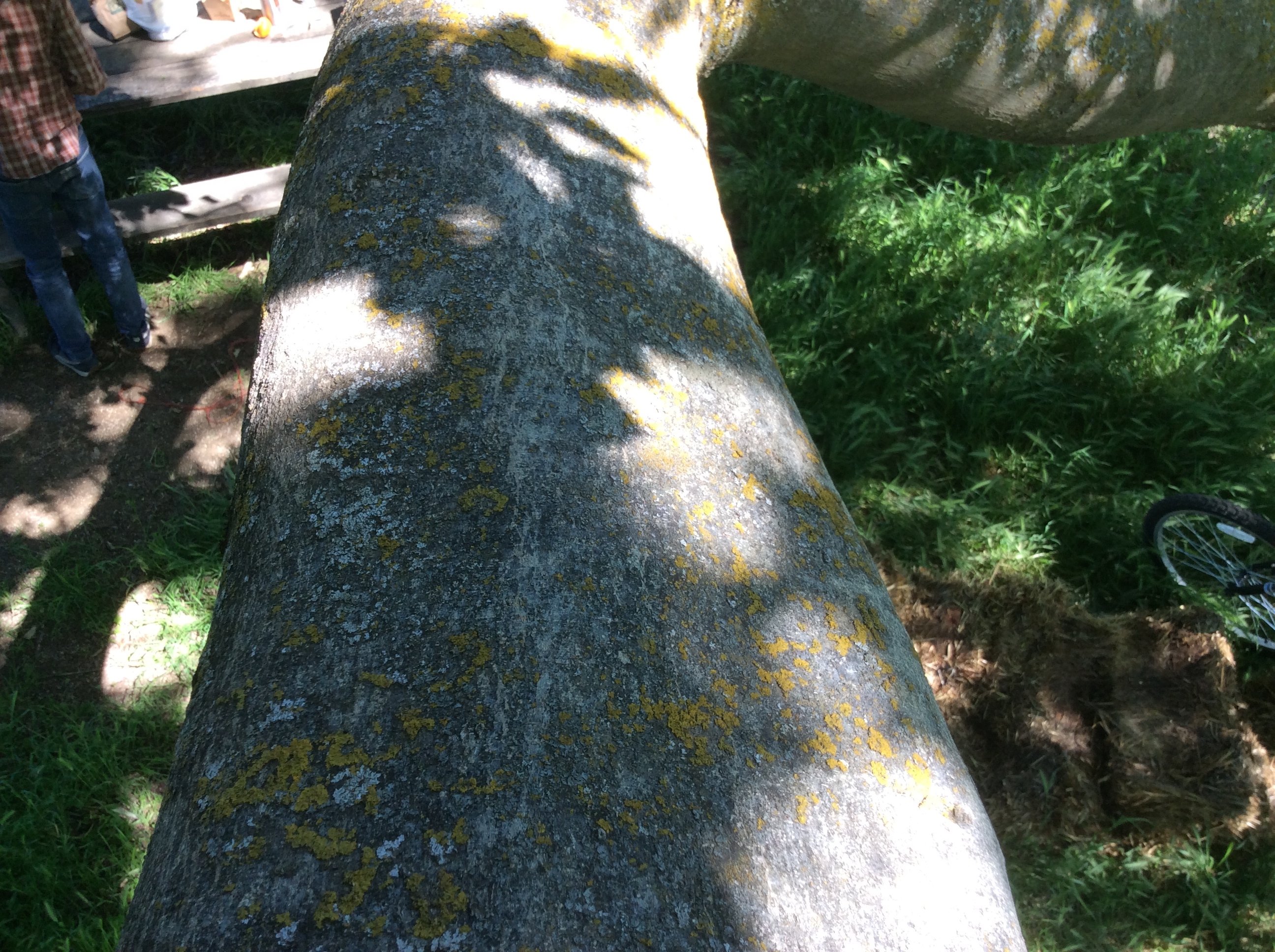
It tells me about love in the carvings on its trunk and about wishes and the need to be remembered in the small tokens left in its nooks and elbows. It talks to me about slow change in its healed and scarred branches; it talks to me about patience and ease in its journey to its current height and placement; being in just the right time and in just the right place. It is consistent and rooted and solid feeling. But it is not still or fixed.

Inside this piece I see how a crafted choice did what we wanted, like my wanting to have twine as the vehicle to bring audience into the space from outside and what the knotting of that twine would do or not do, just like what JanLee and I together in her car did, got all wound up together, singing and laughing together as we approched our meeting place versus Peet and Chris arriving solo on their bikes did for them, envigorating them and creating space and softness in their bodies; to have food in this outdoor space under this tree, and so give folks a chance to enjoy some flavors by having a mini picnic indoors in the middle of the space on top of Peet’s giant photo collage of the tree we laid out on the floor,  which is what we did on our picnic. We shared a meal and shared some part of ourselves and we left this sharing at the tree. In this way this work feels representational. We re-present our journey to the tree with the twine, we re-present the picnic by having a picnic in the Uclub, we re-present our shared experience by doing a task together (being witnessed building the collage) that builds something which is what we did in sharing our meal under the tree. But how do we show time?

Doreen Massey speaks of temporality as  easy to imagine and space as something material, by placing time as a structure on things do we deprive ‘space’ of its own sense of place? The tree I am playing on has grown up and out for years, expanding itself by smaller increments un/seeable by the human eye but none the less happening all of the time, the tree is never not growing. It is never fixed or still, but we give it this orientation because we see it as rooted; we see the tress growth as time. My sense movement comes not from the development of layered sequences but from moving through space itself. It is in this way that I know a place and understand the temporality of that place.

Time is a tricky thing to “represent”,  And I am not interested in representing it. I am interested in what time does and how place is wrapped up in it. My body remembers a place phenomenologically. I can smell the grass and the hotness of the sunshiny places and I can taste the cheese and the strawberries. I can feel the playfulness and the pull of muscles when climbing the tree or the bit of wonder at discovering the little waterfall.

How do we play with time in performance? What does playing with time do? Do we get lost or more found?

As I climb the tree on a branch that extends straight out over our picnic spot, I find a different perspective I had not expected to encounter. I was 12 feet off the ground and about the same distance from the trunk of the tree. I could still just touch folks on the ground if I lay down on my belly and reached down to them and they up to me. It is still close enough to touch but far enough away to feel different. It calls to mind the ideas of vertical wayfaring. Me on the branch above the spot of our picnic, I am layering a journey and experience one on top of the other.  It feels literal but I realize it is what could work in in indoor space. To actually go vertical in the Uclub could place this experience of unexpected encounter inside that particular space.

I imagine going up onto the wooden ceiling beams and throwing down the trash that sits up there collecting dust. I knew there were things up there and it kept bringing me back to the tree and its carved initials and tokens in its elbows, and the small bits of trash or that purple sweater smashed in to the grass with things growing through its weave, how we leave parts of ourselves everyplace we go, and so we are not always in one place but in multiple spaces at the same time.

Deirdre Dance

Land, Dance

Deirdre Dance

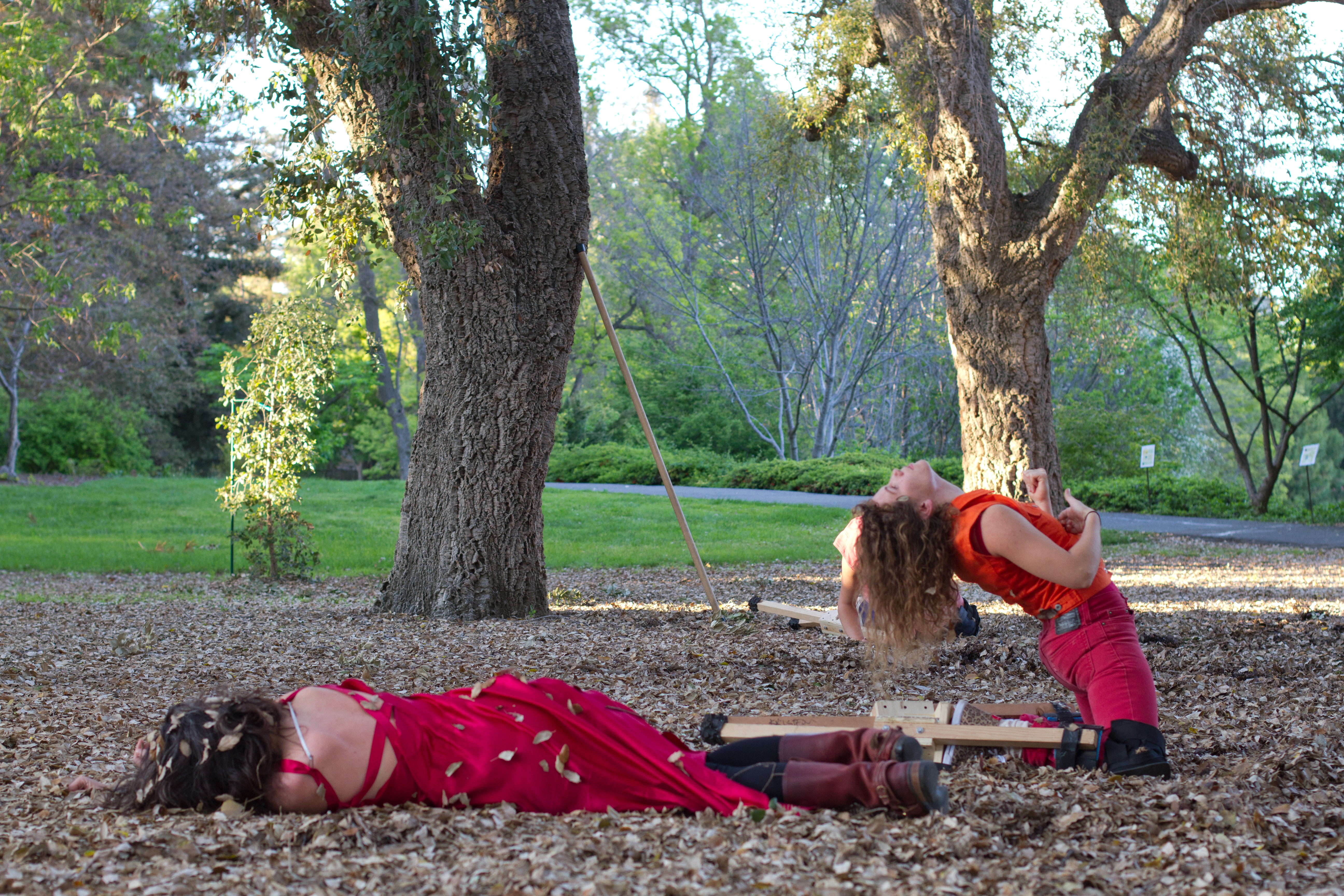
This practice involves looking at relationships to wilderness through movement and vocal practices on and within landscape. Living directly in a particular land and recording the practices in that place inside that season, a relationship is created to that location and will be recorded with camera, microphone, paper, water, earth and body.

I am interested in how the body loses or changes time while working in wild and urban spaces.  How does a human in nature impose temporality on that place? This human temporality is another way of understanding a different colonialism; you impose your timeframe on a landscape and deprive it of its own. But is the ecology that results just for our ears/eyes/body?

Inside a body’s relationship to the environment is a different nonhuman relationship to wilderness. What parts or aspects or dimensions of the body are being engaged when in these places that are not usually being engaged in an urban setting. What occurs between human and land? What is the implied relationship to place? How do we belong in landscape? What is the shared heritage?

Embodied knowledge, is used as a way to record the stories that encapsulate that landscape research. An interpretation of the stories that are owned and those that are not for sale. What kind of experiences do you go through to have an empowered, ethical response to landscape/environment/ecology?

The practice asks: what is the embodied impact humans have on learnign through landscape? The type of learning that revolves around traditional exchanges, storytelling and tacit understandings of the places we live with, on and inside. 

WDNLISplendidIsolation-69

The Forgotten Body Remembers


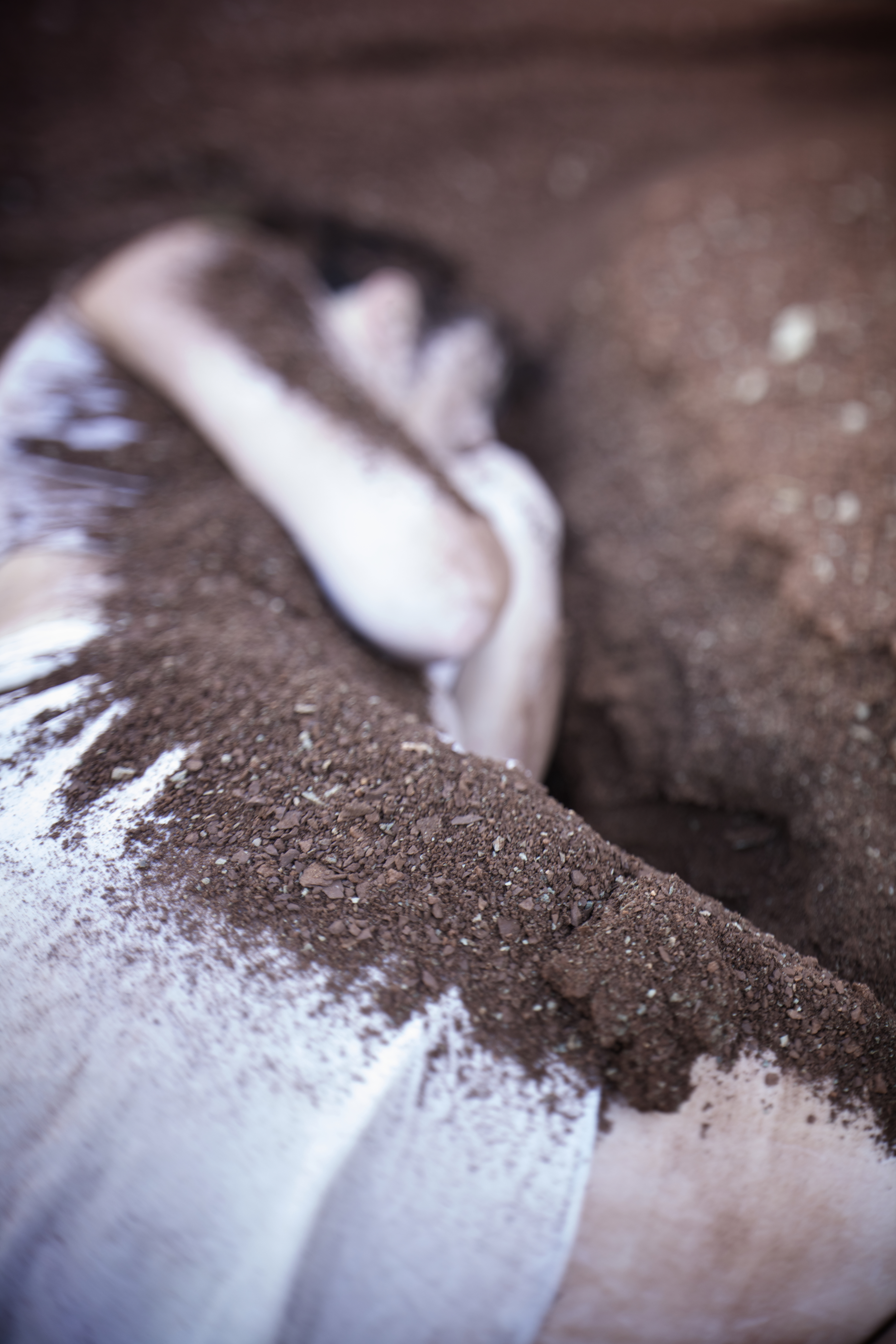
WDNLISplendidIsolation-69The forgotten body remembers is a moevement based practice that explores embodied knowing: tacit and inate. This work draws from a particular set of research questions about our relationship with landscape, attempting to understand and interpret through a knowledge medium – the body – that creates a different set of insights on human-non/human interaction.

How does body memory work? How do we accumulate and access memory in our body? As a practice I create scores that allow for accumulated inate knowledge to be accessed and performed. We, as audience participants, witness the unfolding of heritage buried in the body.

What season effects the body in what ways? Winter produces a slower metabolic process in the body, an exploration of fallowness; the autumn is the time of great seeding and decay, and the body is preparing and dying simultaneously; in spring there is riotous growth under ground with roots spreading deep and wide and in this month the body is restless and full of potential energy; in the summer everything is alive and in bloom and the body is very energetic and alive.

In the studio and /or outdoors I use state/of/being exercises that evoke the elements of that season and the memories that reside in that ecology to stimulate the body to move with this inate tacit knowing; the knowledge already inside of me, forgotten until awakened through focused attention. I have altered something by focusing attention on these forgotten places; I have become more embodied, I am in relationship to the landscape I am working with/in; I have been attuned to this place and temporality. I have located this knowledge/memory to an engram inside of my body/mind. I become more embodied as I remember.